

I blew out my knee the first month of college.
I went to club soccer tryouts, which started on the grass intramural fields at Bowling Green State University, but were quickly moved indoors to the recreational field house when a thunderstorm started.
The field house had old astroturf, the stuff that is obsolete now, and I was still wearing cleats inside when during the scrimmage I had the ball on my left foot, planted with my right and my knee ripped to shreds.
The ACL was torn, there was damage to the MCL and meniscus damage as well. I had surgery to repair it, they took a hamstring graft for the procedure, and still have the scar on my knee to this day as a reminder of the ordeal.
That was back in 2007, I was a relatively healthy 18-year-old at the time, and my freshman year of college became partially defined by thrice weekly physical therapy, calling a university shuttle service to take me to PT about a two miles from campus.
About a decade later, when I was living in Austin, I dislocated my right knee cap, ironically playing hockey at the then-named Cedar Park Center, home of the Texas Stars. The ensuing MRI after that injury revealed that my initial ACL surgery either didn’t take or at some point in the past decade I’d re-torn it and my body had acclimated itself, either way if you compared internal side-by-side images of my left and right knee, one clearly has an ACL intact, the other doesn’t.
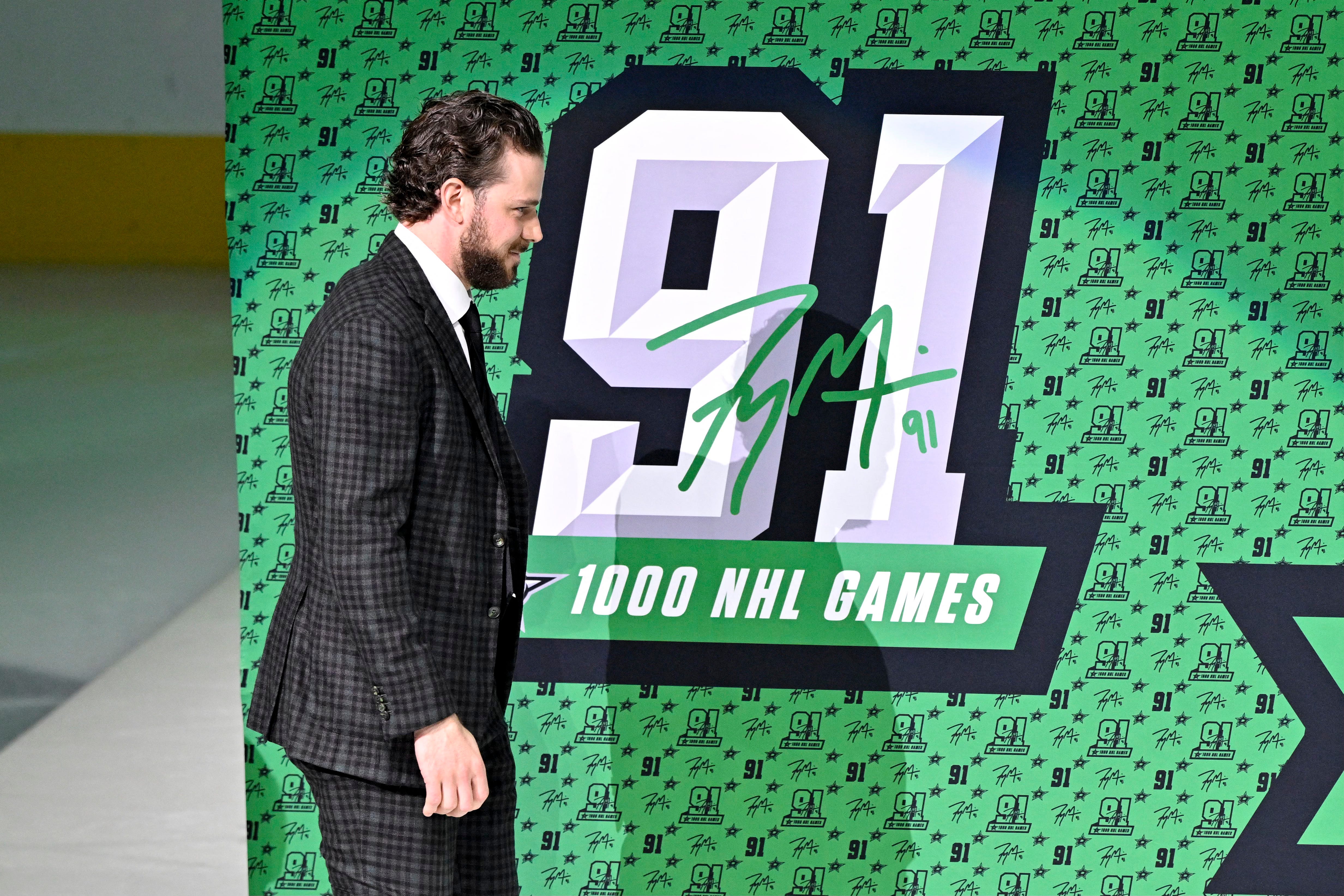
I’m telling you this story because the Dallas Stars officially announced today that Tyler Seguin had surgery to repair a torn ACL on Tuesday. The surgery was performed by Dr. Dan Cooper, one of the highest-profile orthopedic surgeons who one day earlier did a similar surgery on Kansas City Chiefs quarterback Patrick Mahomes left knee.
Seguin and I are too very different individuals. He’s a professional athlete, who happens to be one of the hardest-working players I’ve ever covered. The fact his NHL career is still going after a myriad of other injuries to the achilles, shoulder, hip, and much more is a testament to that.
And that’s why the Stars, for now, aren’t ruling Seguin out for the remainder of the playoffs, something Stars general manager Jim Nill told me in person on Tuesday and then reiterated in this press release today.
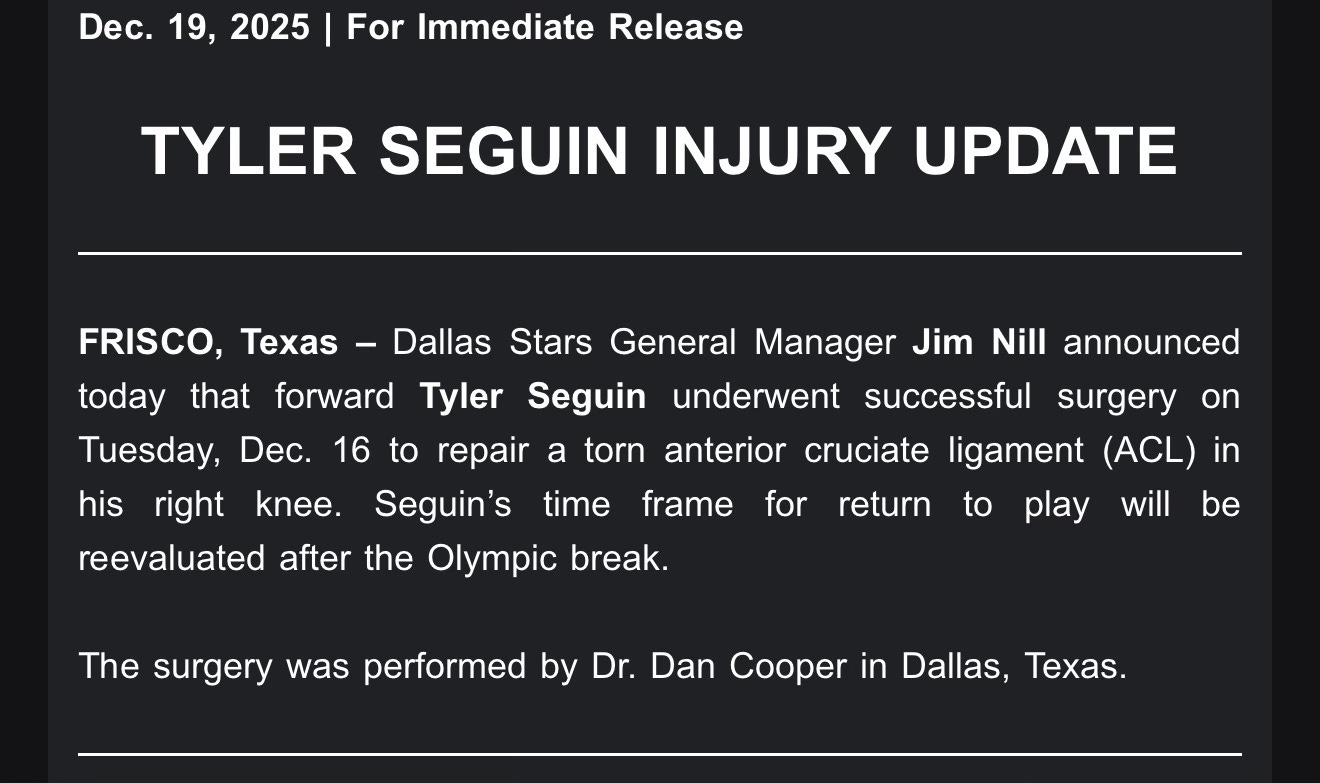
Nine months used to be the norm for athletes returning from major ACL surgery, which would take Seguin’s timetable to next September, in time for training camp for next season.
But the Stars right now are still leaving the door partially open for Seguin to return in the playoffs, which would mean he’d potentially go from the operating table to Stanley Cup Playoff games in less than six months.
This is reflective of two things.
The Stars are going to give Seguin the benefit of the doubt, his work to get over past injuries and push his body to the limit is well documented.
The Stars by not ruling him out, have some flexibility and mystery about them when it comes to how much they can or can’t spend at the NHL trade deadline.
But here’s the other thing, and what I keep drawing back to, Seguin potentially returning in six months would be June 16. Five months would be May 19. That would be either the Western Conference Final or Stanley Cup Final, and last time I checked, those series tend to be hockey on overdrive.
That timing would also be a bit groundbreaking, and could be a cautionary tale.
Adrian Peterson famously returned from ACL surgery after six months and then won an NFL MVP award in 2012. It made everyone think six months was the new norm, it made athletes push things faster in their recovery, and it also led to more failed recoveries.
Seguin is only 33, he’s already rescued his career once from potential ending because of injury, and based on his past history, given nine months, he’ll probably be in good shape for the start of next season.
But the idea of rushing it back potentially for this postseason, based on evidence in front of us, feels a bit foolish. Especially with the new NHL CBA rules about salary cap limitations in the postseason.
From a pure asset management part of this, and you have to think bluntly as a team, is it really worth holding close to $6 million deadline cap space to potentially roll a dice on a still healing surgically repaired knee?
Probably not.
I was really stupid when I blew out my knee. I tried to get back and play basketball with some of my friends freshman of college, way before the nine month window, and I did more cartilage damage, had to have another procedure to clean things up and delayed my ability to skate or play hockey again by another six months.
I so desperately wanted to get back to feel normal, and I wasn’t patient enough. Now I’m not a professional athlete nor did I have the technological advances or access to the things Seguin will have during his recovery, but I learned the hard way that rushing this can have consequences.
It’s something the Stars should consider, not just for the asset management and opening up cap space, but also to free Seguin of the unfair expectations or pressure to return this spring.
In your conversations with Nill last week, did this come up? Like you mentioned, Seguin is an incredibly driven athlete who will undoubtedly attack this rehab. If he flipped the switch from disappointment to attacking pretty quickly, it wouldn't surprise me if he told Nill that he's coming back this year. With the way Nill treats people, it would not surprise me if one of the reasons the stars are not making a decision on SE-LTIR is that Nill feels like he owes it to Tyler to give him the chance to keep his word and return.
I too blew out my knee in college, and I couldn’t agree more. The stars should do Seguin a favor and remove the option of a late playoff return from the table. He can focus on patiently targeting a return next season.